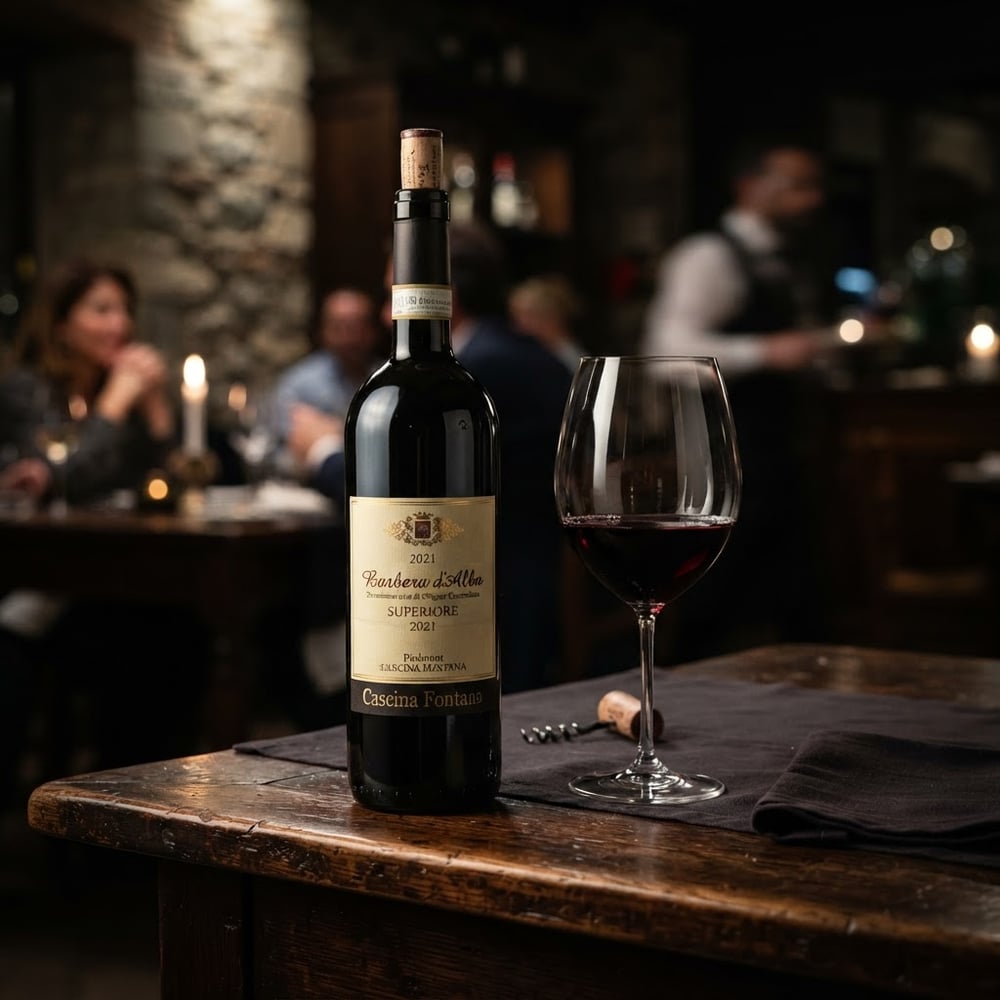
Pio Cesare has been making wine in Alba since 1881, and Barbera has been the everyday red of Piedmont's hills for far longer. The grape ripens to high acid and deep colour on the same slopes that give Barolo its structure, but it drinks with a fraction of the tannin.
- Barbera, Piedmont's high-acid red grape.
- Barbera d'Alba DOC, from the hills around Alba.
- 2023 — a warm, generous vintage in Piedmont.
- 14% abv, dry, medium-bodied.
How it is made
Barbera d'Alba is a DOC: the wine must be at least 85% Barbera, grown in the hills of the Alba zone, and it cannot be released before a set minimum ageing. Unlike Barolo, which is also Nebbiolo-based and built for the long haul, Barbera is vinified to keep its fruit and its bite. The grape's naturally low tannin means the structure comes from acidity rather than grip.
How it tastes
Black cherry and plum lead, with a violet lift and something earthier underneath. The acidity is the point — bright and persistent, cutting through the fruit rather than sitting behind it. Tannin is medium, so the finish is savoury and clean rather than drying.
Good to know
Barbera was long regarded as the workhorse grape of Piedmont, planted on the best sites before Barolo and Barbaresco claimed them. It is also one of the few red grapes that holds its acidity even in hot years, which is why it has survived in the region's vineyards for centuries.
Contains alcohol.