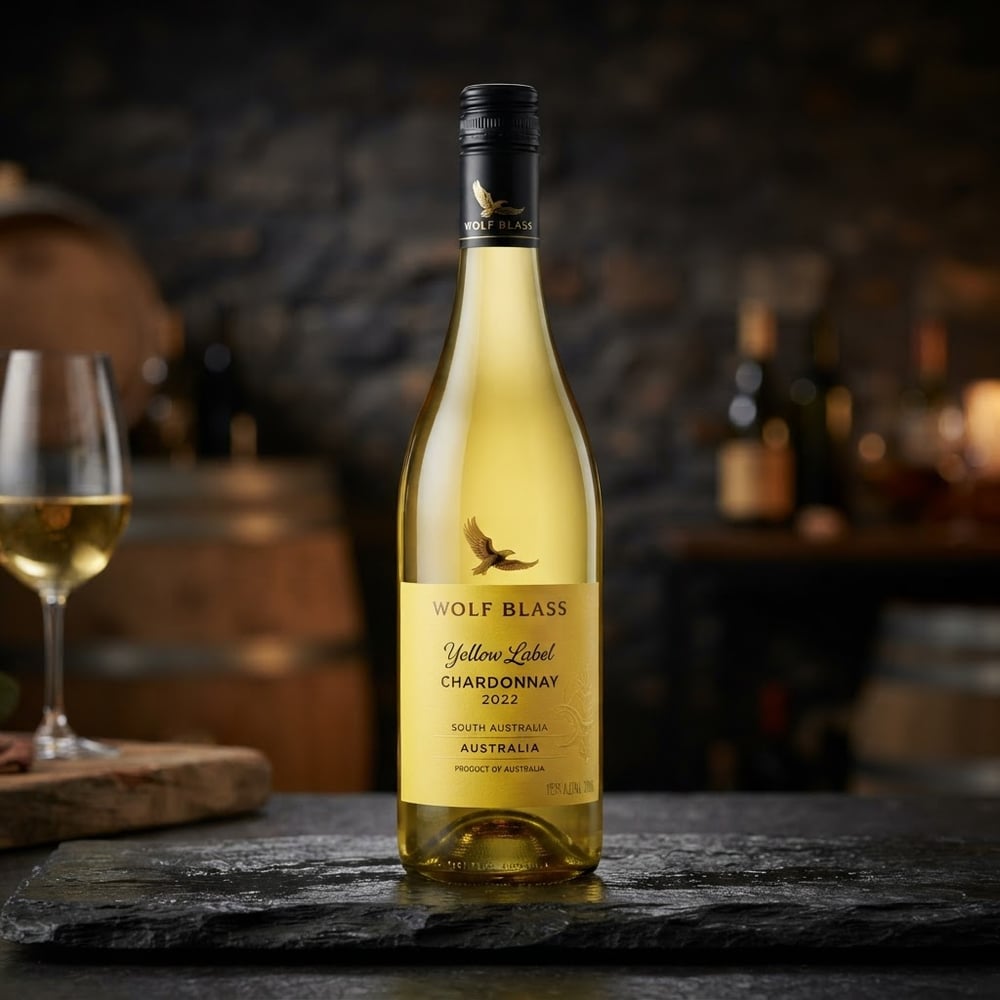
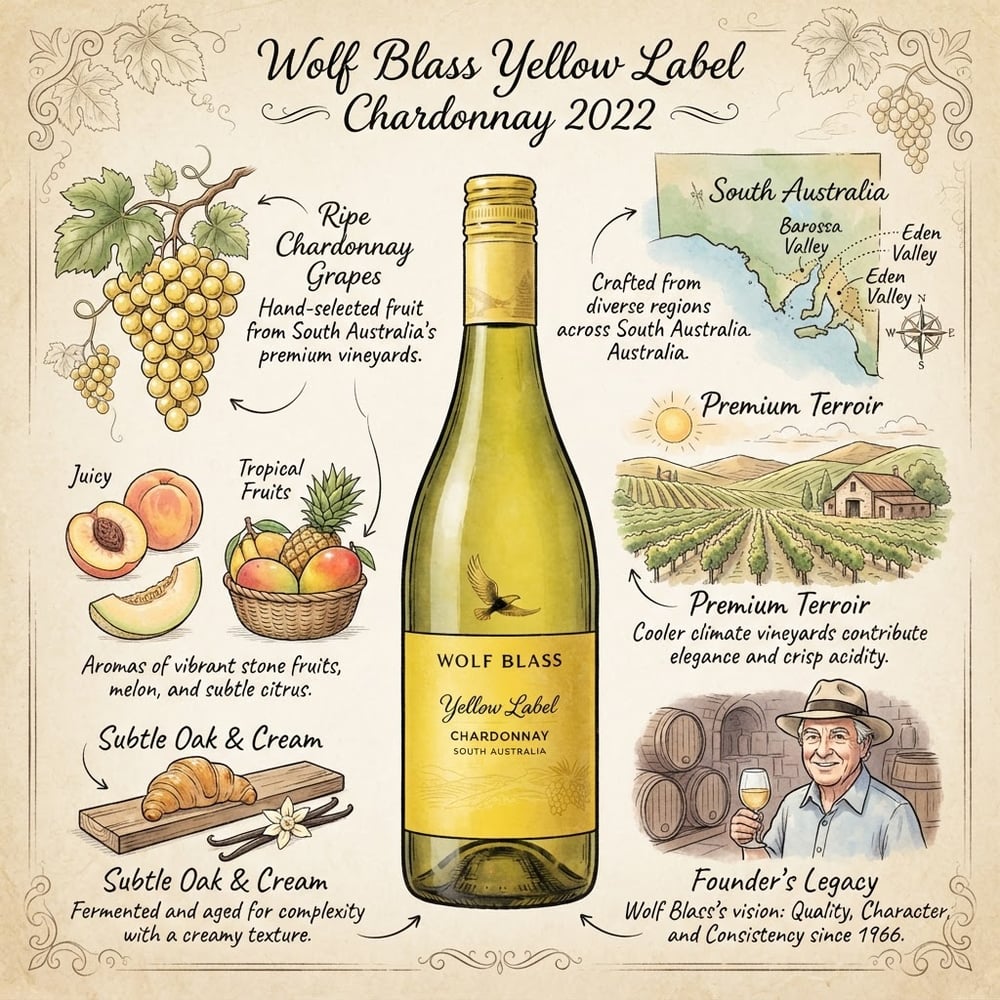
Wolf Blass built Yellow Label on the idea that a wine should taste the same every year, and the Chardonnay has carried that promise since the 1970s. The fruit comes off vineyards across South Australia, picked from warm inland sites where Chardonnay ripens fully and holds on to flavour without losing its shape.
- Chardonnay, the white grape of Burgundy, grown here in South Australia.
- South Eastern Australia, a vast zone spanning several states.
- 2022, a warm vintage with steady ripening.
- Full bodied, dry, medium acidity, low tannin.
- 13.5% alcohol, 750ml.
How it is made
South Eastern Australia is a multi-region appellation, which lets a producer blend across vineyards to hold a house style steady from year to year. Chardonnay here is often fermented in stainless steel for the fruit, then given time on oak for the vanilla and buttery notes the Yellow Label is known for.
How it tastes
Stone fruit and melon sit at the front, with citrus cutting through. Vanilla oak and a creamy, buttery texture come in behind. Full bodied and dry, with medium acidity keeping it from feeling heavy.
Where it comes from
South Australia holds some of the country's oldest Chardonnay plantings, and the grape is now the most widely planted white variety in Australia. The warm inland climate does the ripening; the blending across regions does the consistency.
Good to know
Wolf Blass was one of the first Australian wineries to put the grape variety and the vintage year on the front label, at a time when most producers did not. Yellow Label has been in continuous production for over four decades.