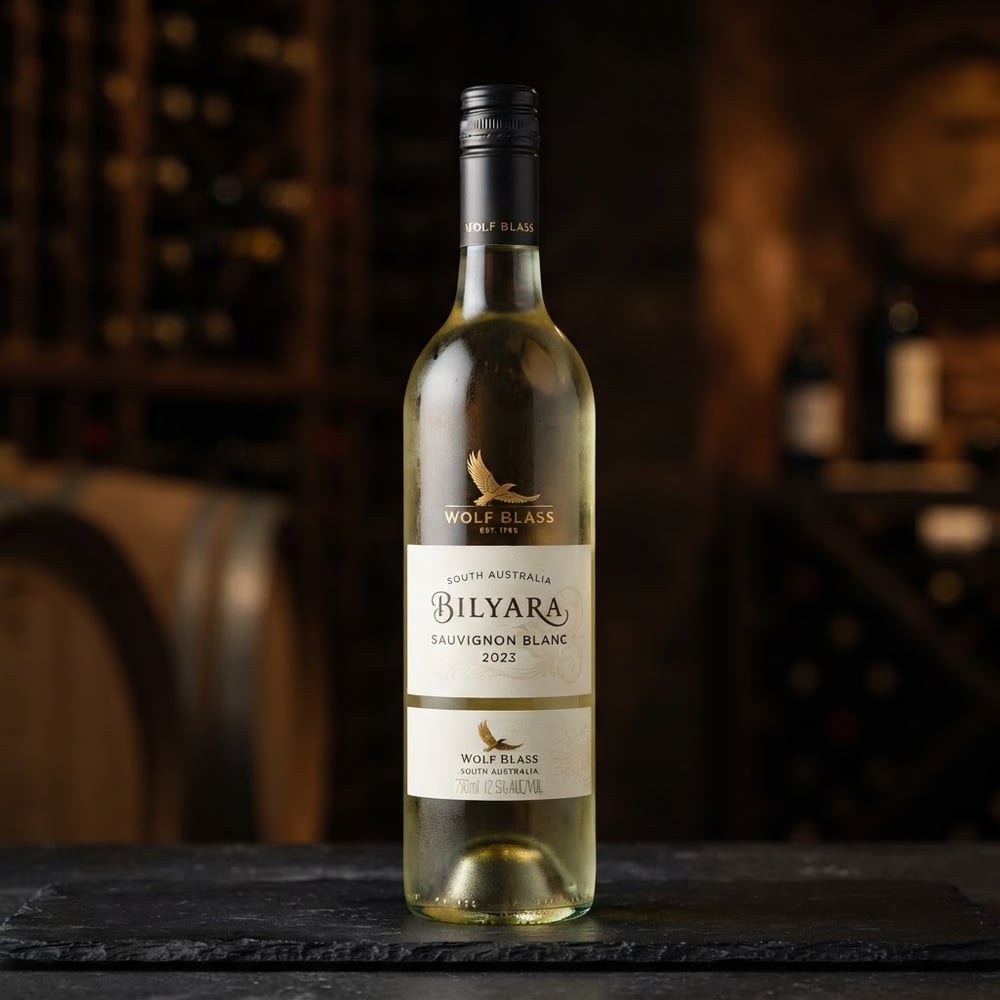
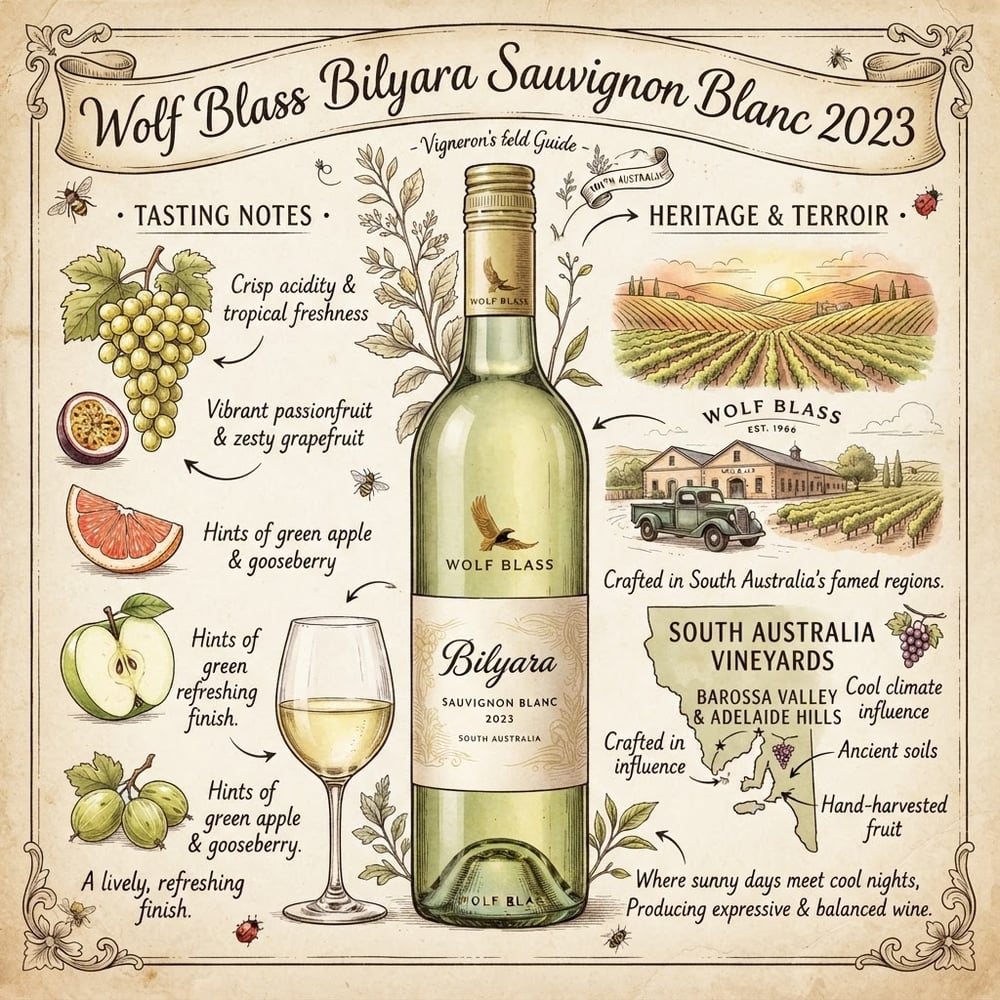
Wolf Blass built its name on the Barossa and Eden Valleys, and this bottling takes fruit from across South Australia's warmer inland vineyards. It is Sauvignon Blanc in the Australian mould: picked ripe, kept clean, and built around fruit rather than grass. Bilyara is the name of the original Wolf Blass property in the Barossa, which is where the label's story starts.
- Sauvignon Blanc, a single-variety white.
- South Eastern Australia, a wide multi-region appellation.
- 2023, a small, dry, concentrated vintage.
- 12.5% ABV, light bodied, dry.
- High acidity, low tannin.
How it is made
South Eastern Australia is not one vineyard but a zone, and a wine carrying it can draw on fruit from several regions. For a white like this, that means the blend is assembled for consistency rather than for a single site. Fermentation is cool and stainless steel, which keeps the aromatics intact and the acidity sharp.
How it tastes
Tropical fruit first, passion fruit and a little gooseberry, then citrus and green apple. There is a herbaceous edge underneath that keeps it from reading sweet. Acidity is high and the body is light, so it finishes clean and quick rather than broad.
Where it comes from
Sauvignon Blanc is a Loire and Bordeaux grape that Australia took up widely from the 1970s. In the warmer inland reaches of South Australia it ripens further than it does in France, which pushes the flavours from green toward tropical.
Good to know
Wolf Blass was founded by Wolfgang Blass, a German-born winemaker who arrived in Australia in 1961 and started his own label a few years later. Bilyara, the name on this bottle, was what he called his Barossa property.