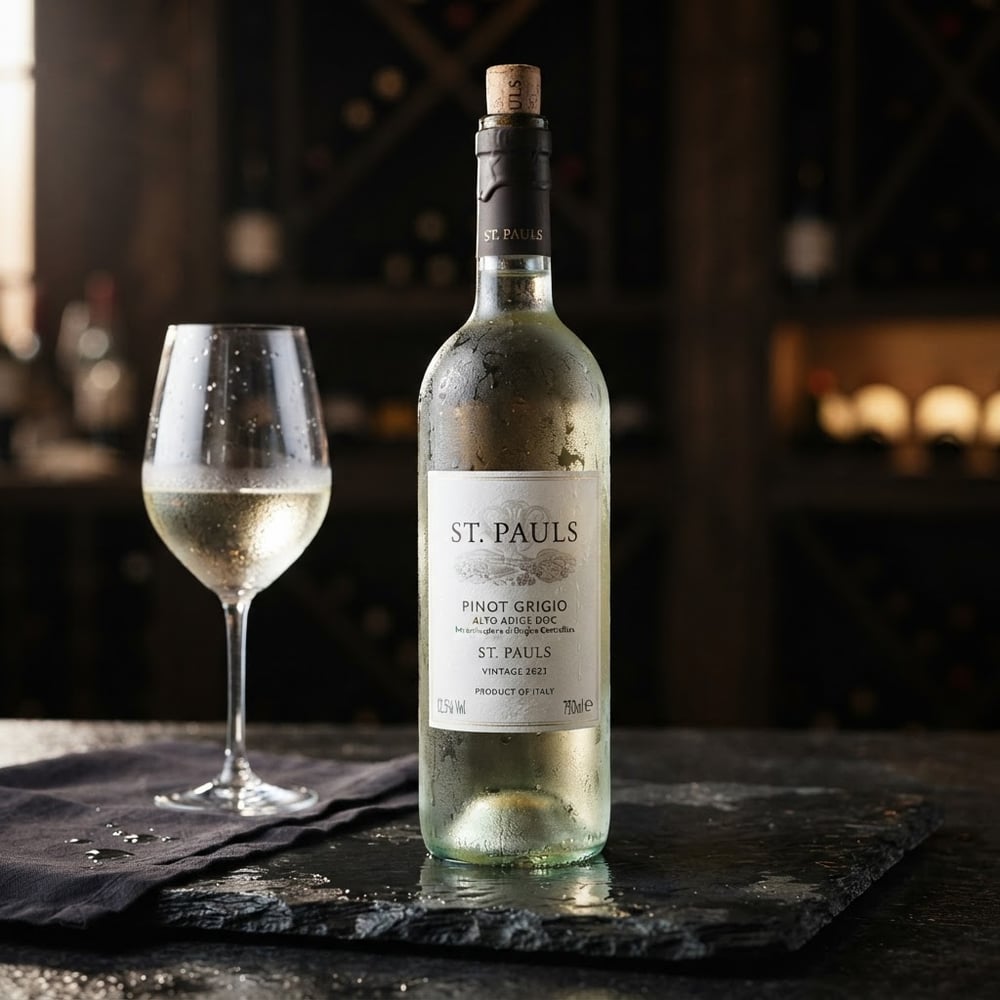
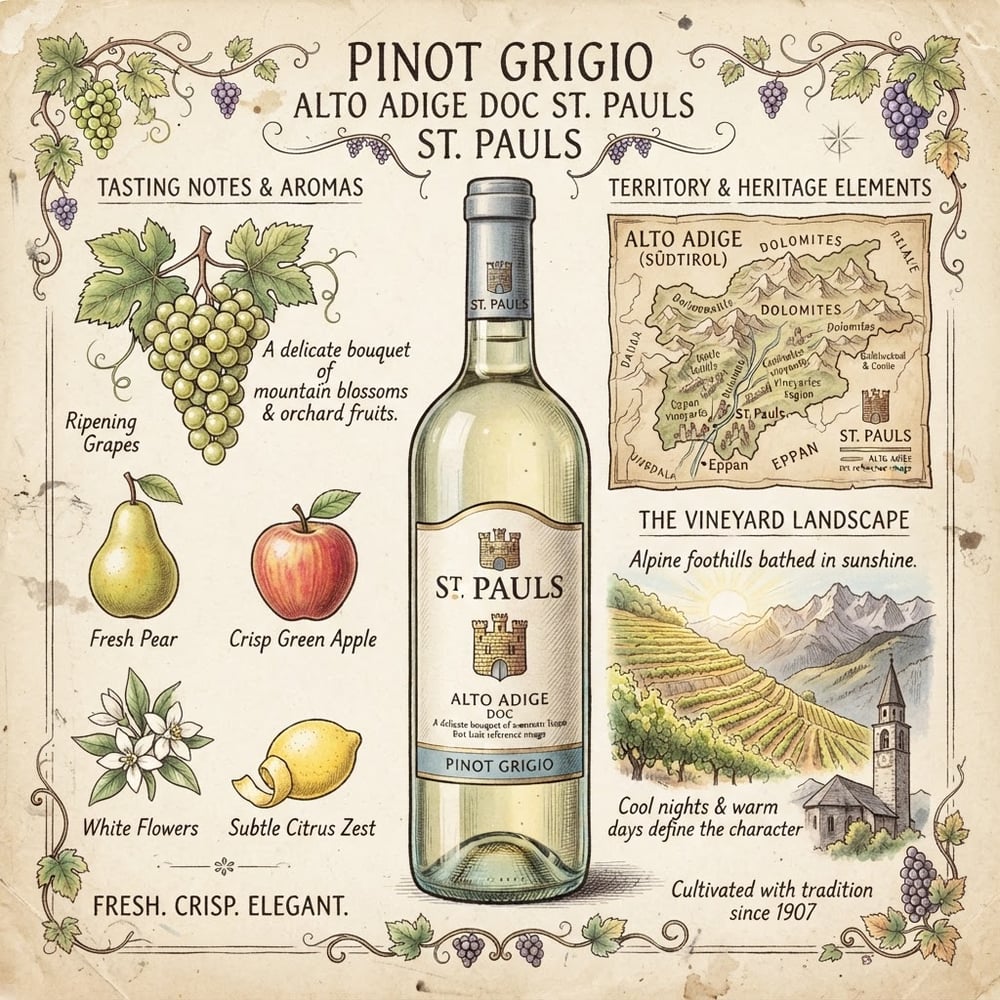
St. Pauls is a co-operative in the South Tyrolean village of Girlan, and Pinot Grigio is the grape that made Alto Adige's name outside Italy. Up here the variety behaves differently from the flatland versions: the vineyards sit high on the valley sides, the nights are cold, and the grape keeps an acidity that warmer places burn off.
- Pinot Grigio, picked in the Alto Adige hills.
- Alto Adige DOC, Italy's northernmost wine region.
- 2023, a warm year with a cool, slow finish.
- Dry, medium body, high acidity.
- 13.5% alcohol, 750ml.
How it is made
Alto Adige DOC sits in the Alps, on the Italian side of the Brenner Pass, and the appellation covers a narrow band of valley floor and steep terraced slopes between roughly 200 and 1,000 metres. Pinot Grigio is a mutation of Pinot Noir, so the skins carry a faint copper-pink colour. Pressed off them quickly, the juice runs clear and ferments to a pale white wine. The altitude does the rest, holding the acidity in place through a long growing season.
How it tastes
Green apple and pear lead, with citrus behind them and a green, alpine-herb note running through the middle. There is a wet stone quality on the finish that comes from the mountain soils. The acidity is high and juicy, and the mouthfeel is fuller than the pale colour suggests. Exotic spice sits on the nose, the kind that shows up in ripe Pinot Grigio from this zone rather than the leaner, neutral versions.
Where it comes from
Alto Adige is a German-speaking province that has been Italian since 1919, and the wine labels carry both languages. St. Pauls works out of Girlan, on the road between Bolzano and Lake Caldaro, where the co-operative model has held the region's small growers together for generations. Pinot Grigio, or Grauburgunder as it is called here, is one of the varieties the zone does best.