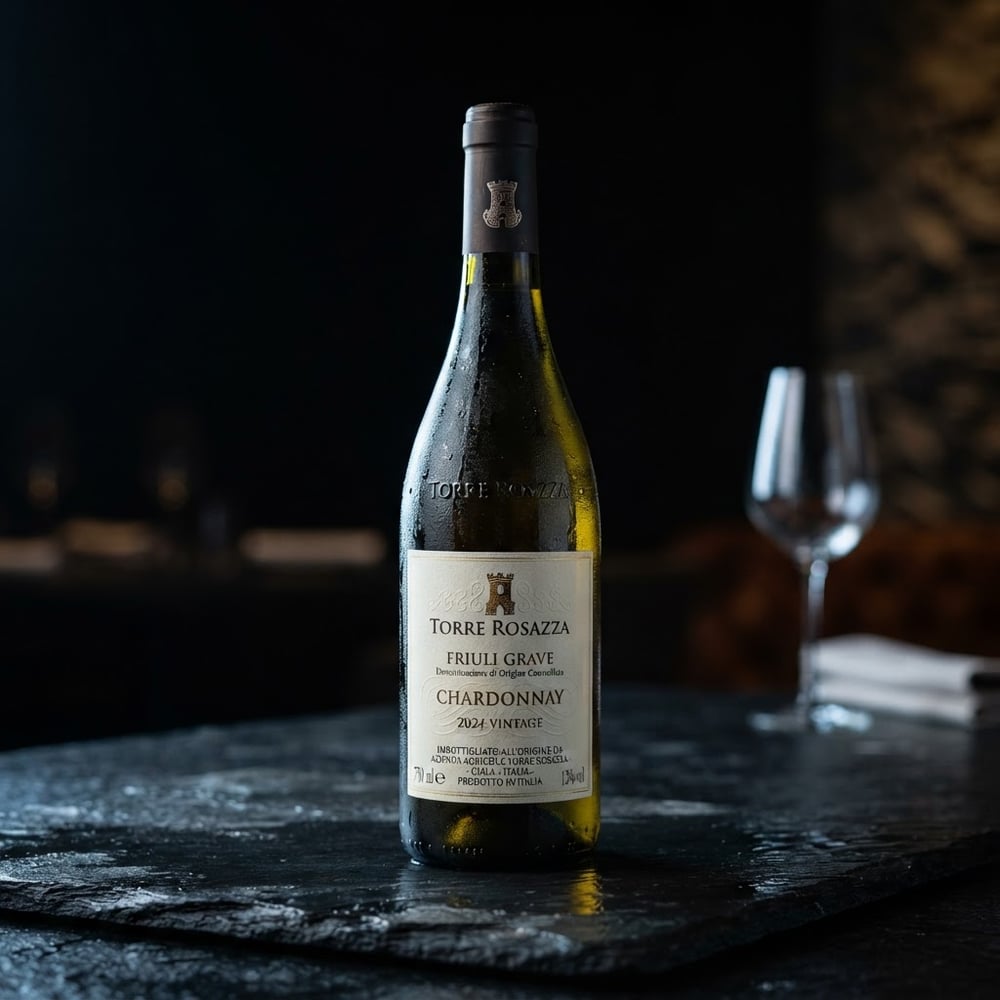
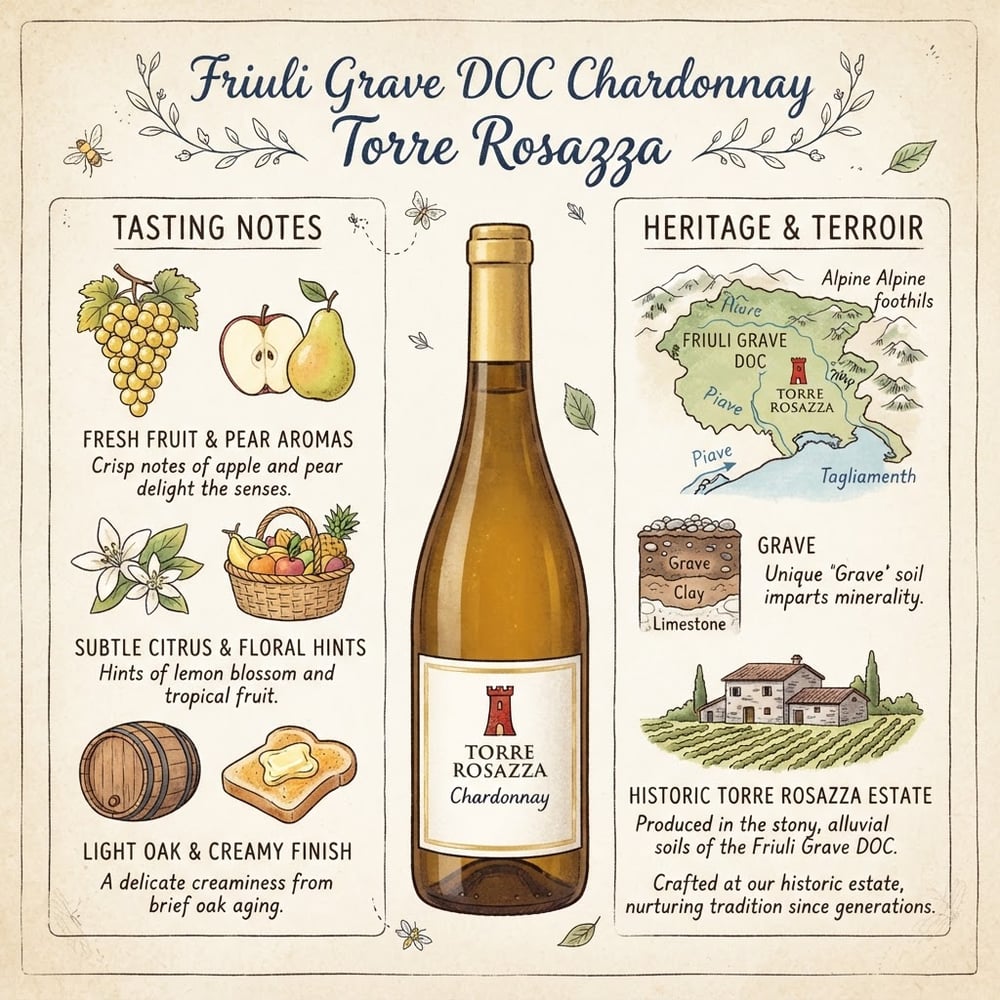
Torre Rosazza farms in the Friuli Grave, the flat gravel plain that runs from the Tagliamento river up toward the foothills of Friuli Venezia Giulia. The appellation covers a wide, stony bench of land, and the soils are exactly what the name says: grave, gravel and sand, laid down by rivers and left behind. Chardonnay planted here gives a leaner, more mineral wine than the grape's reputation in warmer places suggests.
- Chardonnay, grown on the gravel plain of Friuli.
- Friuli Grave DOC, Friuli Venezia Giulia, north-east Italy.
- 2024 vintage, 12.5% alcohol, dry.
- Medium body, medium acidity, low tannin.
How it is made
Friuli Grave DOC is a still white wine appellation, and Chardonnay is one of the varieties it permits. The style across the zone is built around freshness: fruit picked early enough to hold its acid, fermented cool, kept away from the new oak that would bury the grape. What ends up in the bottle is Chardonnay as a quiet, dry white rather than a broad one.
How it tastes
Green apple and white peach first, then citrus, with a faint almond note on the finish and a mineral edge underneath. The nose is wildflowers and ripe fruit, the colour pale straw with greenish reflections. Medium in body, dry, low in tannin, with acidity that holds the whole thing upright instead of pushing forward.
Where it comes from
Friuli Venezia Giulia sits in Italy's far north-east, against Slovenia and the Adriatic, and it is the country's white wine heartland. The Grave is its largest DOC, a broad river plain of gravel and sand that drains fast and warms quickly. Vines struggle a little here, and that struggle is the point: stressed roots give smaller berries and more concentrated juice.
Good to know
Friuli is often called the Burgundy of Italy, less for the wines themselves than for the seriousness with which the region treats white varieties. The Grave takes its name from the gravel soils, not from anything sombre. The same ground that makes the plain poor for most farming makes it good for vines.