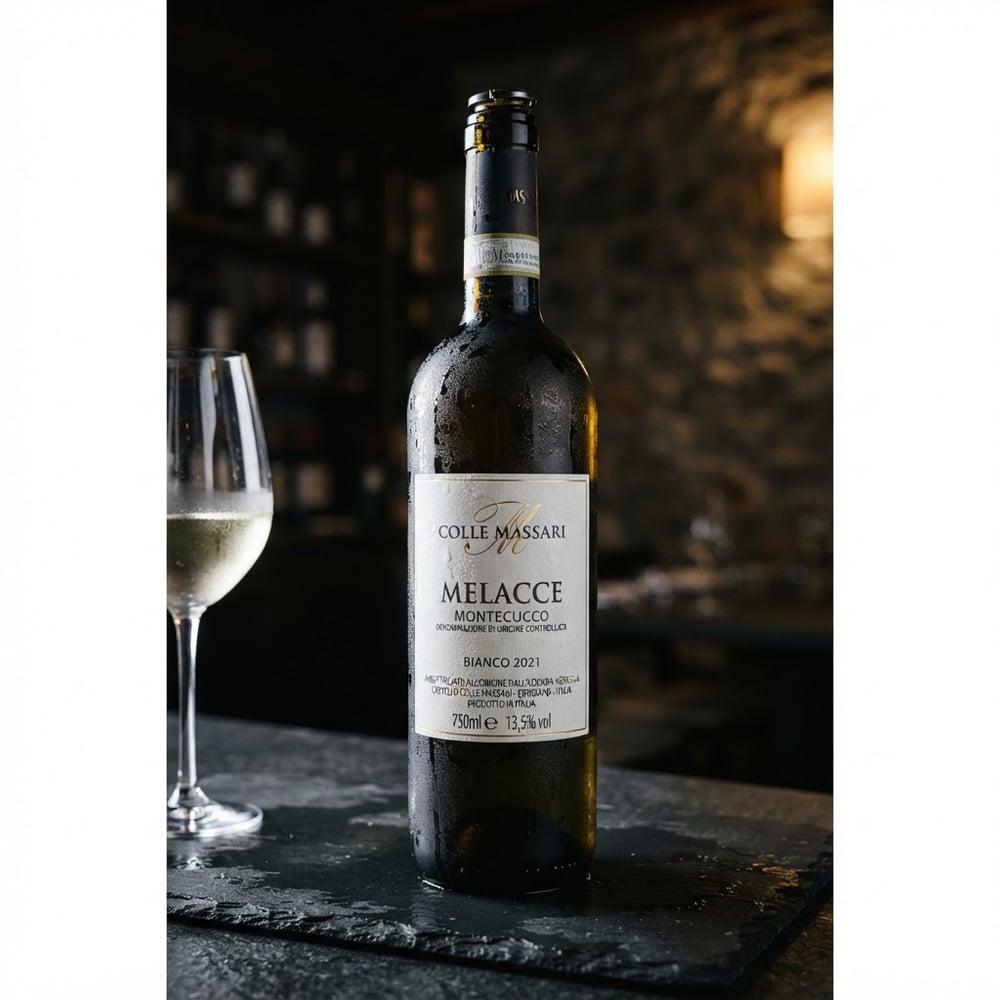
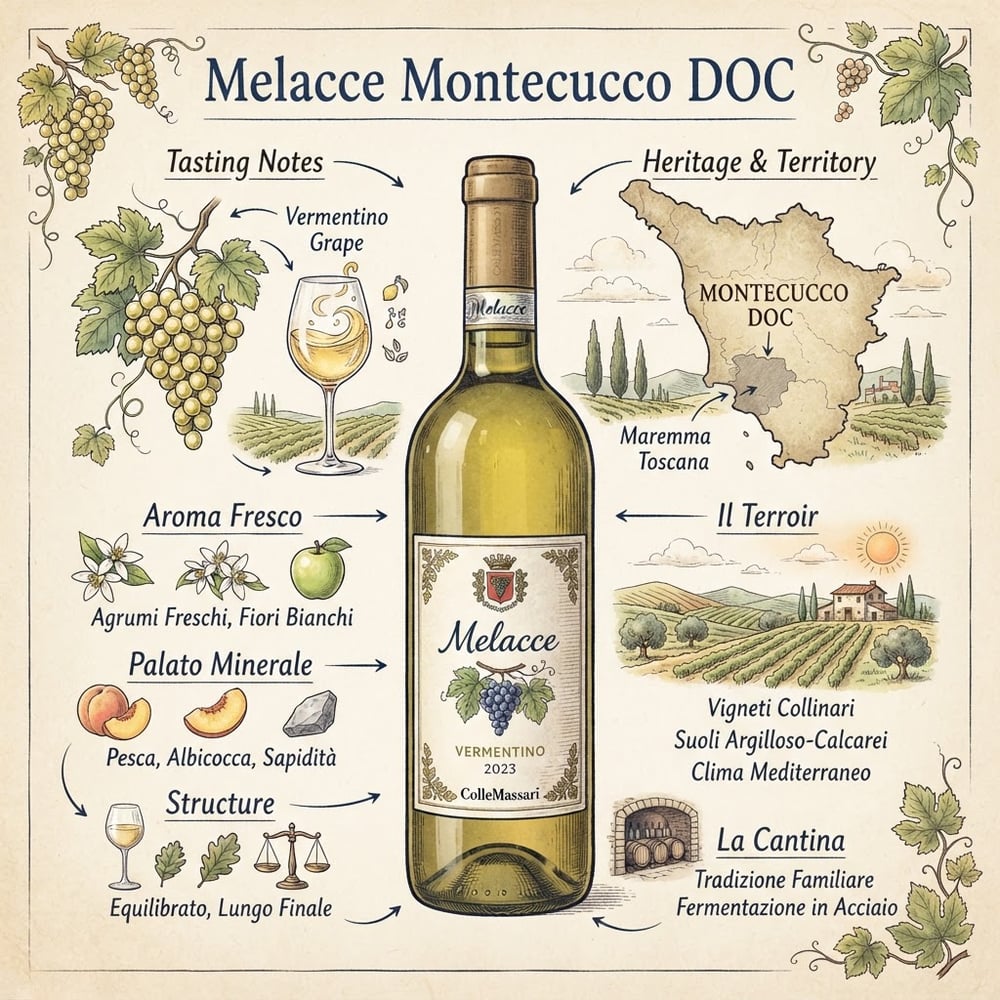
Colle Massari farms the hills south of Montalcino, in the Montecucco DOC, where Tuscany turns warmer and drier than Chianti and the white grapes keep their bite. Melacce is Vermentino from those slopes, a grape that arrived in Italy by way of the Ligurian coast and Spain and settled all along the Tyrrhenian shore.
- Vermentino, the white grape of the Tuscan and Ligurian coast.
- Montecucco DOC, inland Tuscany, south of Montalcino.
- 2021, a warm year that kept the acidity in the fruit.
- Dry, 13% alcohol, medium body, low tannin.
- 750ml bottle.
How it is made
Vermentino is picked early enough to hold its acid, and in Montecucco the warm days and cool nights do most of the work before the fruit reaches the cellar. The grape carries thick skins and a naturally high acidity, which is why it stays lean even in a hot vintage. The wine is kept fresh rather than heavy, so the fruit and the saltiness stay separate instead of blurring together.
How it tastes
Citrus and green apple come first, then a saline streak that runs through the middle, then a finish of bitter almond. High acid, medium body, low tannin. The bitterness at the end is the grape's signature, not a fault. It leaves the mouth clean rather than soft.
Where it comes from
Montecucco sits in the Maremma's northern edge, between Montalcino and the sea. The appellation covers both reds from Sangiovese and whites like this one, and it was carved out of the surrounding hills in the 1990s. The proximity to the coast is what gives the whites their salt.
Good to know
Vermentino goes by several names depending on where it lands: Pigato in Liguria, Rolle in Provence. Same grape, different accent. It has been planted along the Mediterranean coast for centuries and is one of the few white varieties that genuinely improves with a little bottle age.