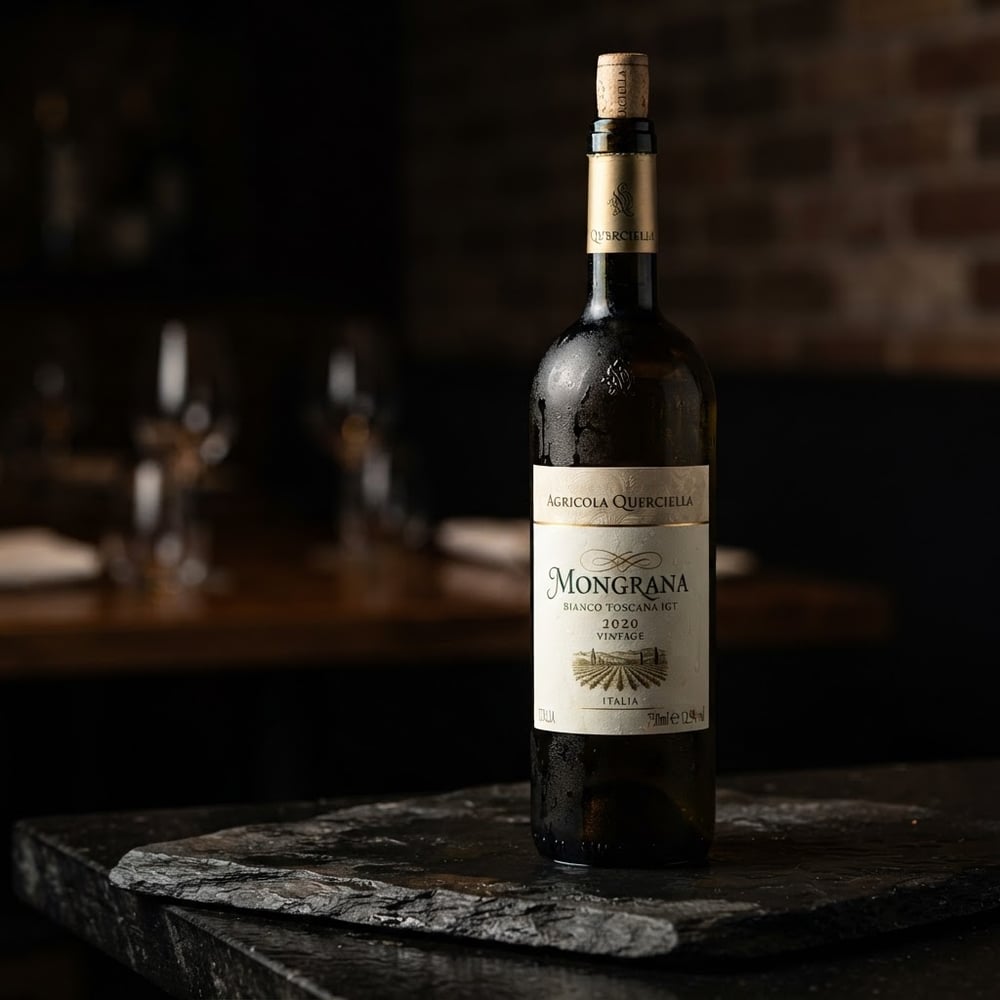
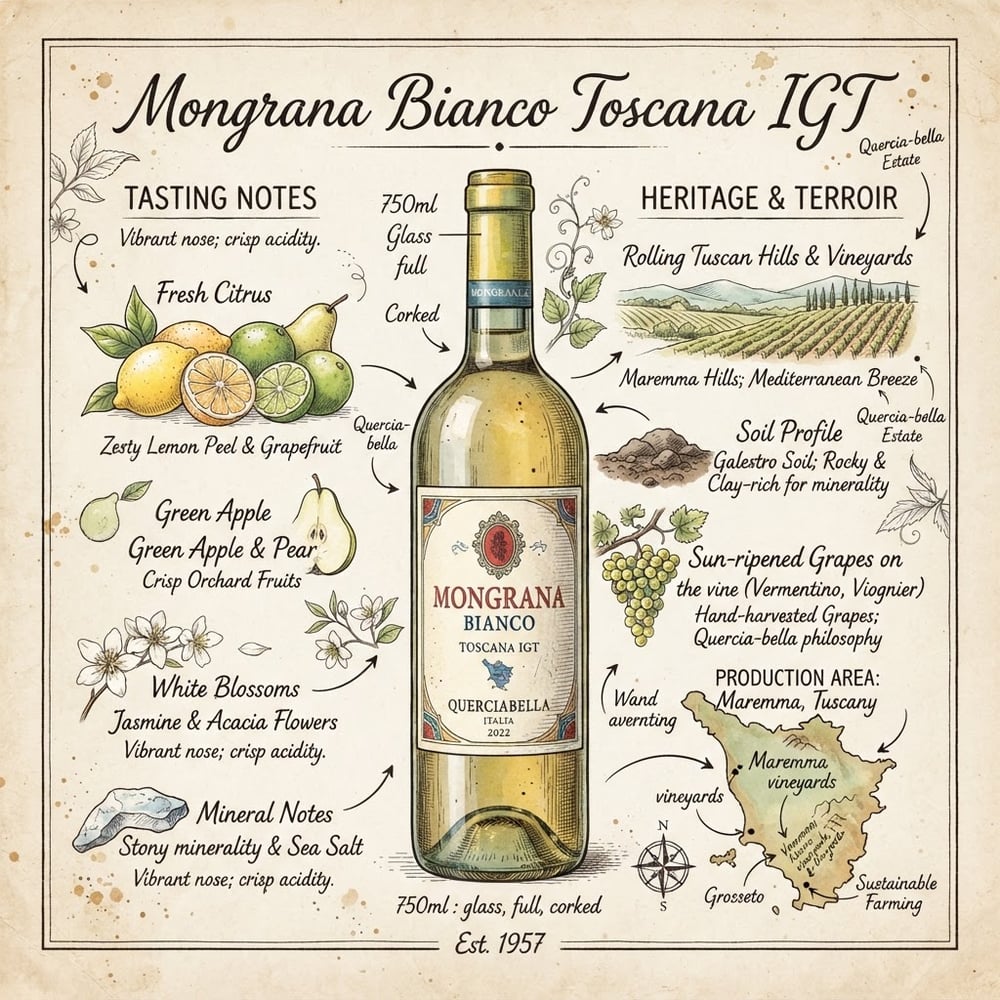
Querciabella farms its Tuscan vineyards organically, and this white comes off those hills as a blend rather than a single variety: Vermentino for the citrus and the salt, Viognier for the weight and the flowers. It carries the Toscana IGT label, which is the wide, flexible one, and the two grapes together give a wine that is dry but not thin.
- Vermentino and Viognier, blended.
- Toscana IGT, central Italy.
- 2020 vintage, 13.5% abv.
- Dry, medium body, high acidity.
- Low tannin, as a white should be.
How it is made
Vermentino grows all along the Tyrrhenian coast, from Liguria down through Sardinia and the Maremma, and it keeps its acidity in heat. Viognier is the opposite temperament: low acid, thick skins, heavy with scent. Blending the two is a way of borrowing the structure of one and the perfume of the other.
How it tastes
Stone fruit and citrus zest first, then white flowers, then a faint almond note on the back. The finish is saline, which is the Vermentino talking. Acidity stays high through all of it, so the wine reads fresh rather than soft despite the medium body.
Where it comes from
Tuscany is red wine country by reputation, Sangiovese on the hills, but the coast and the lower slopes have always grown whites. The IGT label gives a producer room to plant outside the classic appellation rules, which is how a Vermentino and Viognier blend ends up under a Tuscan name at all.
Good to know
Vermentino is known as Rolle in France and Pigato in Liguria, the same grape under three names depending on which side of the border it is grown. It ripens late, which is why it holds its acid so well in warm places.